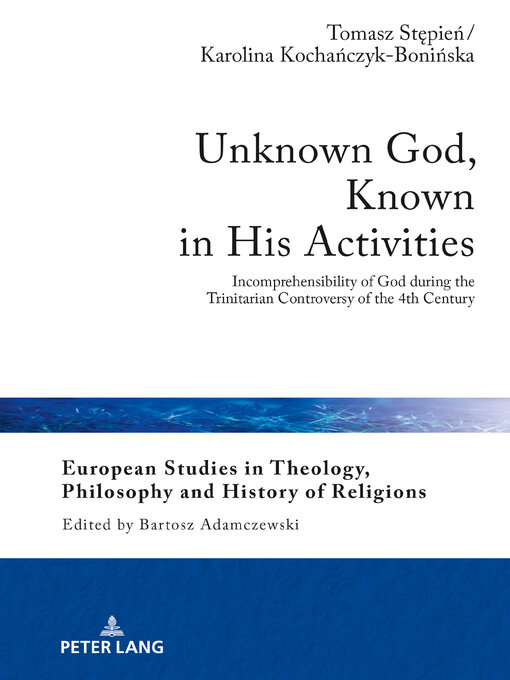
What can man know about God? This question became one of the main problems during the 4th-century Trinitarian controversy, which is the focus of this book. Especially during the second phase of the conflict, the claims of Anomean Eunomius caused an emphatic response of Orthodox writers, mainly Basil of Caesarea and Gregory of Nyssa. Eunomius formulated two ways of theology to show that we can know both the substance (ousia) and activities (energeiai) of God. The Orthodox Fathers demonstrated that we can know only the external activities of God, while the essence is entirely incomprehensible. Therefore the 4th-century discussion on whether the Father and the Son are of the same substance was the turning point in the development of negative theology and shaping the Christian conception of God.
- Available now
- What's new?
- Belly Laughs: Humor for Kids
- Fairy Tales Reimagined
- Popular titles
- Check these out!
- Read-Alongs
- Squad Goals
- Favorites for Early Readers
- Life As We Know It: Realistic YA
- Narrative Nonfiction for Kids and Teens
- See all ebooks collections
- Available now
- What's new?
- Life As We Know It: Realistic YA
- Favorites for Early Readers
- Popular titles
- Check these out!
- Squad Goals
- Belly Laughs: Humor for Kids
- Narrative Nonfiction for Kids and Teens
- Fairy Tales Reimagined
- See all audiobooks collections